
The Capture Brief: Decisions to Make Before the First Frame
Many capture problems begin before the camera takes the first photograph. A subject can shift, sag, dry, deform, wilt, melt, or otherwise deteriorate during imaging. The feature that matters may not be clearly defined. The selected lens may provide the wrong field of view, or the lighting may hide the surface condition the capture needs to record. The finished GIGAmacro Viewer record may also require scale, attribution, rights, and access information that must be planned before capture begins.
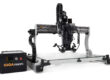
Before you place a subject on the Magnify2 stage, we recommend agreeing what the finished image must allow someone to see, measure, decide, or teach. A one-page capture brief aligns the specimen sponsor, imaging operator, and final reviewer before one decision is repeated across hundreds or thousands of photographs.
1. Purpose and acceptance criteria
“Create a detailed image” is too broad. Define:
- Who will use the finished image.
- The physical area that must be covered.
- The smallest relevant feature that must be visible.
- Whether the project requires visual examination, comparison, calibrated measurement, documentation, teaching, or public access.
- The evidence the reviewer will use to accept or reject the result.
The same planning method applies to manufacturing inspection, component measurement, failure documentation, museum and collection imaging, conservation documentation, research, teaching, and public access. Each application requires a different definition of success.
2. Subject and handling constraints
Record the subject’s exact title or identifier, dimensions, condition, orientation, source or collection, handling restrictions, required supports, and any time-dependent behavior. Delicate objects may require minimal handling. Industrial parts may need traceability, contamination controls, or a defined orientation. Perishable or unstable subjects may impose a practical time limit on capture.
The Fast Food Burger is an unusual but useful example. Because the burger began changing shape within minutes, we used a concealed hotplate to keep it warm without producing enough steam to fog the lens. The finished 322 MP image required 1,680 photographs: 8 rows, 6 columns, and 35 focus positions. Temperature, movement, and optical conditions shaped the setup before processing began. This method addressed the behavior of that subject; it is not a standard procedure for other specimens.
3. Optics, lighting, orientation, and support
Define the required field of view, target detail, camera, lens, magnification, estimated rows and columns, and required focus range. Document which surface faces the camera, how the subject will be supported, whether multiple views are required, and which areas are reflective, translucent, deeply textured, dark, or light.
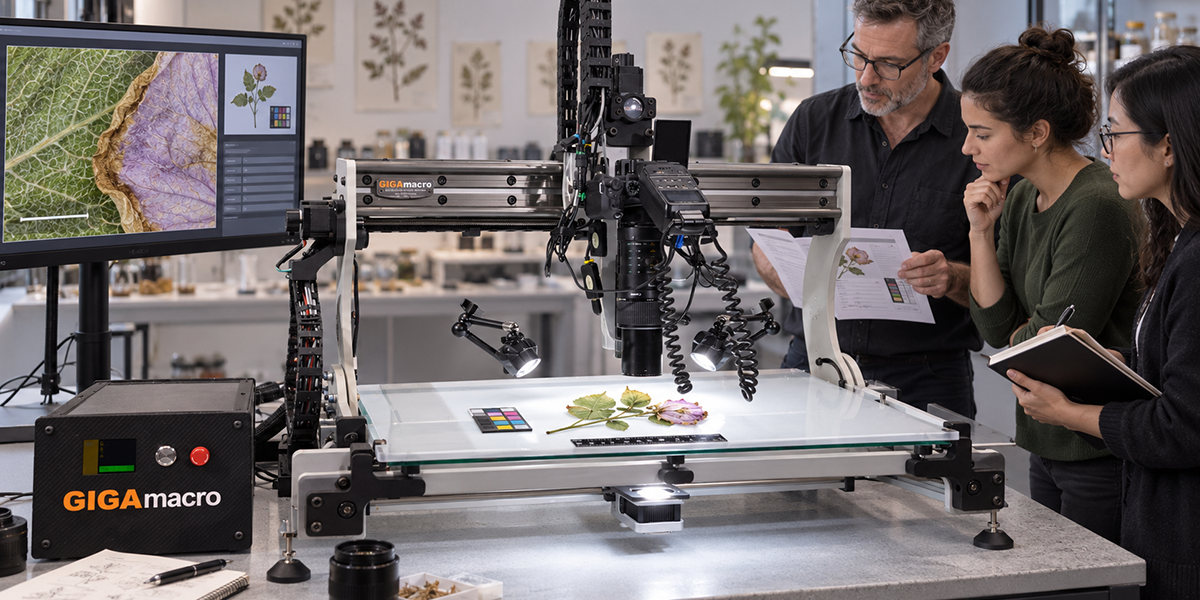
Lighting should be selected for the surface and the information the image must preserve. The standard Magnify2 system includes a Canon MT-26EX Macro Twin Lite Flash and adjustable flash and light-arm mounts. Transmissive lighting is useful for slides, thin sections, semi-translucent parts, and illuminated backgrounds. Cross polarization can reduce glare and support applications such as geological thin-section imaging. Close-range diffusion can soften illumination while retaining control over its direction.
None of these is a universal default. Test the proposed configuration on the actual subject.
4. Representative test capture
Before a long run, capture and process a representative test area. Review it against the acceptance criteria for:
- Exposure and color.
- Focus coverage and image overlap.
- Glare control and visibility of surface features.
- Background and orientation.
- Subject stability.
- Visibility of the smallest required feature.
- Scale and measurement accuracy, where required.
The test also provides an early estimate of source-photograph count, capture time, processing demand, and working-storage requirements. Do not begin the full run until the representative result has been reviewed and accepted. A short test can prevent a large recapture.
5. Completed Viewer record
Define the completed record before capture begins. Required fields may include:
- Title and subject or specimen identifier.
- Contributor, image credit, and institutional source.
- Description and collection membership.
- License, rights, and access state.
- Intended audience: internal team, review group, students, researchers, or the public.
- Scale, reference, calibration method, and verification status where measurement is required.
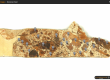
The Wax Seal shows why this decision belongs before capture. Its Viewer record is 420 MP and preserves a raised, detailed surface, but scale is unavailable. That may be adequate for visual examination. It is not sufficient for a workflow that requires calibrated physical measurements. A measurement project needs a valid reference, a documented calibration method, and a verified scale in the finished Viewer record.
One-page capture brief
Before capture starts, confirm that the brief answers five questions:
- What must the finished image allow its user to see, measure, decide, or teach?
- What handling, stability, orientation, and time constraints apply to the subject?
- Which optical, lighting, support, and viewing configuration will meet the requirement?
- Has a representative test been processed and accepted against the criteria?
- Which metadata, rights, scale, audience, and access settings must appear in the completed record?
A capture brief will not eliminate every unexpected condition. It will expose the consequential choices before they are repeated across the image set. Before capture begins, everyone involved should be able to answer one question: what must the finished image allow its user to see, measure, decide, or teach?
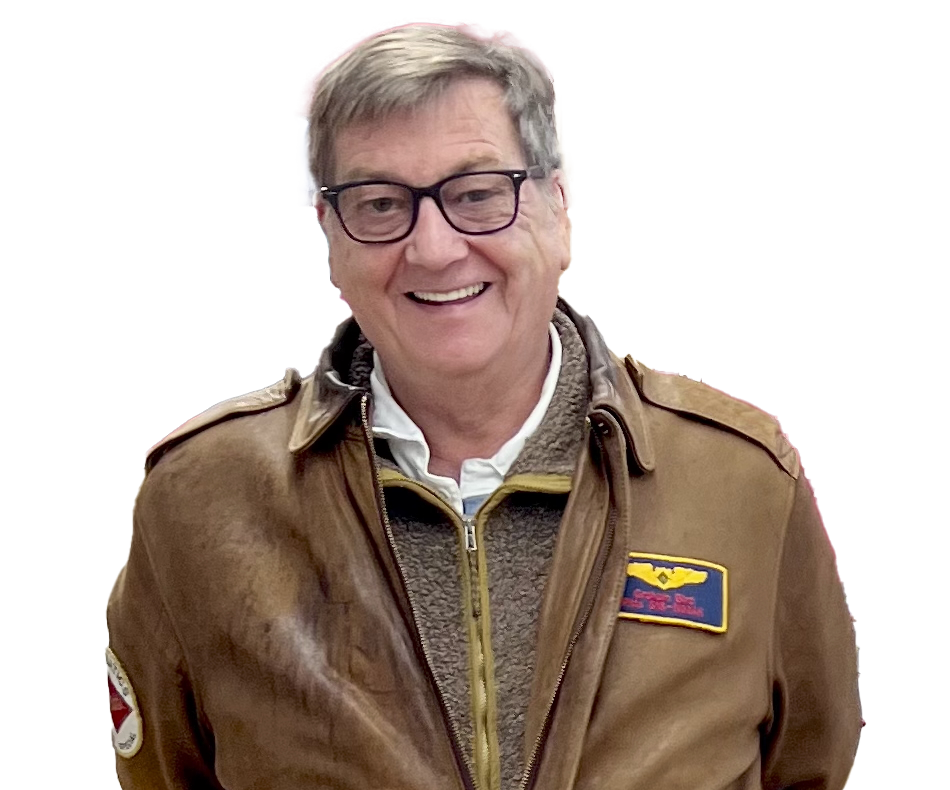
Graham has worked as a business and marketing leader in high technology, aviation and not-for-profit large and small organizations.
He jumped out of corporate life in 2007 to ‘have more fun’ and does so helping small companies with strategy, business, and marketing as well as traveling and making pictures.
He loves working with smart groups of people to solve challenging problems.
Gadgets of all sorts (especially anything to do with aviation and flight) and photography have fascinated since early childhood. He is also an accomplished photographer who exhibits regularly and a former competition aerobatic pilot.
Graham is a transplanted Brit (hence the humo(u)r) who moved to CA in 1996. Now in Oregon via North Carolina (grandchild chasing)
He is a retired Fellow of the Chartered Institute of Marketing and a Chartered Marketer.
You can find him on LinkedIn please connect with him there.