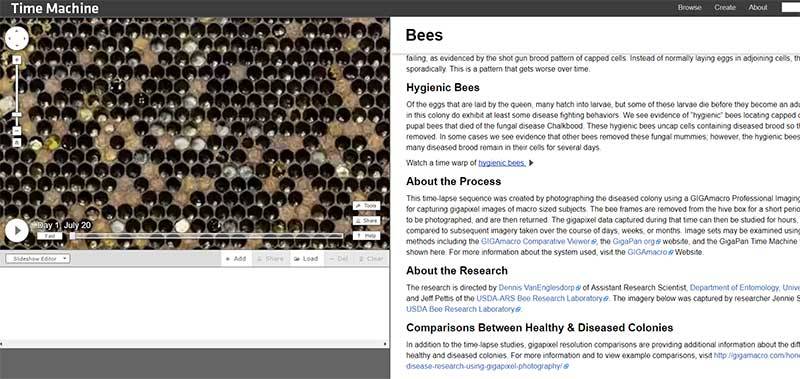

Using a specially designed GIGAmacro rig, we are capturing time-lapse gigapixel images to better understand the progression of honey bee ‘brood’ diseases. The resulting images, taken from both healthy and diseased combs, will not only elucidate the etiology of disease development, but also serve as an invaluable aid to beekeepers seeking to diagnose disease in their colonies. These images will potentially revolutionize extension efforts aimed at helping beekeepers preserve the life of their bees. For more information on this and other efforts of the team included on this project, click here.
The process involves photographing each honey bee frame using a GIGAmacro System, designed for capturing gigapixel images of macro sized subjects. The bee frames are removed from the hive box for a short period (15min to 1 hour) to be photographed, and are then returned. The gigapixel data captured during that time can then be studied for hours, and can be compared to subsequent imagery taken over the course of days, weeks, or months. Image sets may be examined using a variety of methods including the GIGAmacro Viewer, the GigaPan.org website, and the GigaPan Time Machine time-lapse viewer.
The research is directed by Dennis vanEngelsdorp, Department of Entomology, University of Maryland, and Jeff Pettis of the USDA-ARS Bee Research Laboratory. The imagery below was captured by researcher Jennie Stitzinger at the USDA Bee Research Laboratory.
Chalkbrood Time-Lapse Comparison View (Day 1 and Day 8)
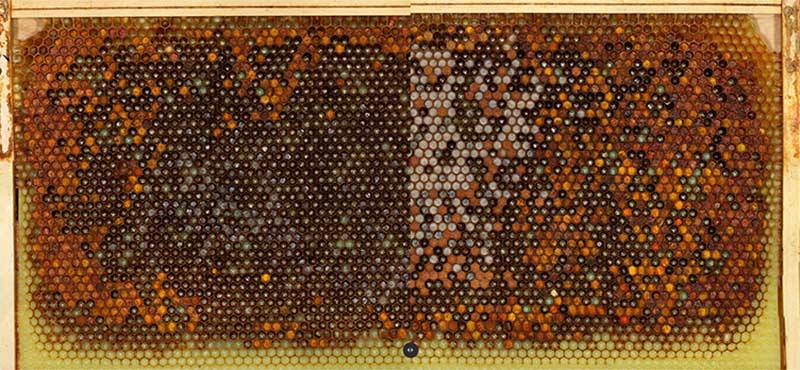
Chalkbrood Time-Lapse Video
The gigapixel time-lapse video shows the progression of a chalkbrood frame over the course of 17 days. The video was made possible through the efforts of Randy Sargent, Paul Dille, and the team at Carnegie Mellon University and GigaPan, as part of the GigaPan Time Machine project.