Our Views, Ideas and Thoughts – the Blog!!
This is where we share our thoughts, our ideas, and our dreams for everything to do with gigapixel macro imaging, and everything else. We welcome your comments and feedback at [email protected].


This is where we share our thoughts, our ideas, and our dreams for everything to do with gigapixel macro imaging, and everything else. We welcome your comments and feedback at [email protected].

Sixteen device teardowns imaged on a GIGAmacro system: 5,041 photographs, 14.3 gigapixels, and a decade of mobile engineering in interactive detail.
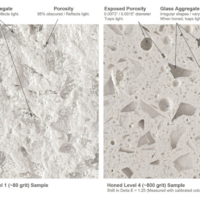
Surface Roughness & Color Control in Architectural Panels When an architect designs a building details matter. When the building is a landmark, clad in revolutionary materials rarely used before, details such as color and texture take on a a special significance. It seems obvious that color and texture need to be predictable and consistent, for…
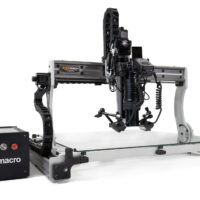
No More Octopus Wrestling With the 2026 Upgrades becoming available for retrofit to older Magnify2 systems, one of the world’s most esoteric activities – Octopus Wrestling – will die out. What, you might ask, is Octopus Wrestling? (I didn’t actually know it was a real thing, just my own “in my head” name for the…

What’s Next for the GIGAmacro Viewer? The GIGAmacro Viewer is constantly updated to add new functionality and to fix any problems we find. See the list below! In talking to a number of users, we are hearing requests for “storytelling” features such as the ability to selectively display Features, to add Features in a sequence (like playing back…

Be a part of the Big Insect Match Maker at Maker Faire Bay Area Are you any match for an insect? Come find which insect best matches your unique maker skills and interests. Get your portrait taken with a giant print of your insect. Learn how technology is shedding light on the maker skills of the insect world. Here’s how you can be…

Using the GIGAmacro Viewer to Annotate Your Gigapan Images Here’s how to annotate your Gigapan images. Gigapan images have been popular for ten years or so, and the gigapan.org web site claims over 55,000 members. Many of GIGAmacro customers have legacy images on gigapan.org and wanted a way to additional functionality – such as annotations –…

The Overall Process The GIGAmacro images featured in the GIGAmacro Viewer are assembled from hundreds, or more often thousands, of individual photographs. To create a gigapixel image, we use a technique generally known as “Stack and Stitch”. Focus Stacking Focus stacking is a technique which combines multiple images taken at different focus planes to…

The Power of Annotating and Sharing Gigapixel Images. The power of annotating and sharing gigapixel images was shown when we were at the Geological Society of America conference in Seattle recently. We got chatting with the folks at the Stonerose Interpretive Center in Eastern WA state, right by the Canadian border. They showed us the fossil below and…
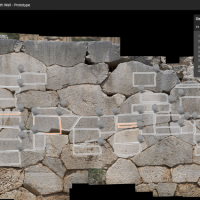
Adrian High is a PhD student at Duke University whose research is fuelled by a fascination with ancient documentary evidence. He explored the multilingual epigraphic record from second and third century Histria on the Black Sea through the prism of sociolinguistic theory as part of his Mag.Phil. at the University of Vienna. This blog is…

RAW Workflow for Gigapixel Macro Images For the vast majority of gigapixel macro imaging, jpg photos and 8-bit workflows are perfectly acceptable, and we ship the Magnify2 configured that way. But what when jpg doesn’t fit the bill? Sometimes we need a RAW workflow for gigapixel macro images. That’s what this blog article is about. First, some…

You can now store your Gigapixel Images for FREE, here’s how. With the release of the latest GIGAmacro Viewer, you can store gigapixel images free and share them, with a private group or with the world at large. To do this you will need to create a username and password and then follow the steps below to…

At some point in a DSLR camera’s lifetime, the mechanical shutter is likely to fail. It is a precise and delicate mechanical part of the camera that has to perform perfectly with every shot. We get some odd looks when we tell clients that cameras should be regarded as a consumable item! But the reality…

Wet specimen holder for macroinvertebrates. Wet specimens are hard to image well. This template and holder are designed to change that, and make producing high-resolution macro images simple and predictable. The key design goals included: Provide diffuse lighting for the subject – form above or below. Keep specimen wet during the photography process. Minimize alcohol or…
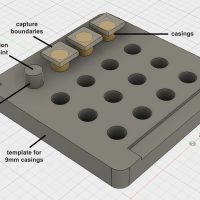
Batch templates are a powerful tool to digitize multiple similar subjects. In this example you will learn about using batch templates to digitize a set of 9mm casings for forensic toolmark examination. The benefit of templates is that many subjects can be photographed in a batch, which allows the Magnify2 to run unattended and do…
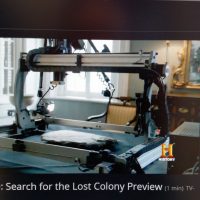
So, what’s the big news you ask? Gene Cooper, GIGAmacro and the Magnify2 are featured in a TV program on the History Channel Examine the Dare Stones in the GIGAmacro Viewer Click on image above to explore. On the History Channel program… You’ll see Gene and our colleague Rich Gibson imaging the key element of the…
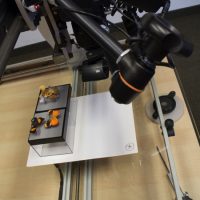
Many of us tend to use our systems to shoot a single subject at a time, and that’s a fine way to use the Magnify2! But what if you have lots of subjects and want to do one set up and then let the system run? The answer to multiple subjects is to use templates…
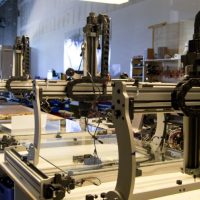
Once you get into production mode, it’s easy to have a bunch of projects and folders that can be confusing and difficult to keep track of. If you have multiple people using your Magnify2, or multiple Magnify2s, the high resolution macro imaging workflow can be even more challenging. Also, there are many different processes and…
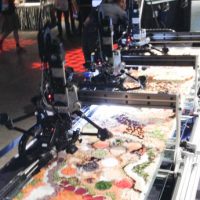
What a month it has been! The first half of August, we drove two vehicles from the bay area to Vancouver, BC, a journey of a little short of 1,000 miles each way. We were there for SIGGRAPH conference, exhibition and an area for experimentation and leading edge technology called ‘The Studio‘ – that’s where…

SIGGRAPH Publishes GIGAmacro Video Interview about our #terabite project in the SIGGRAPH 2014 Studio. The film crew interviewed Graham during the event – you can see a lot of the project and how it was run – and it gives a great thumbnail of the project and the team in Vancouver, BC

This one is a special favorite for me, being born in the UK. This blog post details an interesting placement for one student, Imaging Queen Elizabeth I‘s Prayer Book and some great insight into learning and using the GIGAmacro system. Historic Scotland have a custom built GIGAmacro system with a large scanning table to accommodate…

Gigamacro gets a great shout out in this fabulous TEDx talk by Tatjana Dzambazova of Autodesk. “Technology Whisperer, Tatjana Dzambazova, shares her passion for the latest developments in technology that offer new, exciting ways to archive, help protect, and experience our vulnerable cultural and natural heritage. From photo cameras and scanners, to drones, 3D printing…
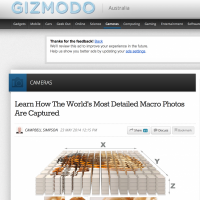
Gizmodo in Australia wrote a very accurate article about GIGAmacro and how to make gigapixel images. Thanks guys!

We were at MakerFaire last weekend and had a ball talking to old and new friends. We had the Magnify2 front and center, and also showed of the new GIGAmacro Viewer (we moved from Flash) with a wide selection of images. We know that insects are very popular and hence we tend to use them…
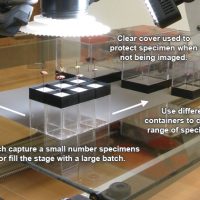
Below are a few example images of specimens provided by Norman Penny from the California Academy of Sciences. Thank you very much Norm and Stan! Scorpion Dragonfly Example 45,000 pixels per inch / 3,615 megapixels Grasshopper Example 15,000 pixels per inch / 788 megapixels Beetle Example 15,000 pixels per inch / 1,300 megapixels Flat Beetle Example 15,000 pixels per inch / 1,300 megapixels Black Beetle Example 15,000 pixels per inch / 1,300 megapixels Lucanid Beetle Example…
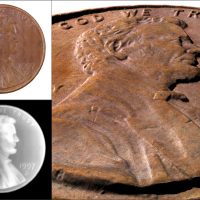
This case study examines processes for capturing and exporting 3D data from small low-relief objects. We’re using our GIGAmacro Magnify2 system to capture the images and off the shelf software to process and convert the data into 3D objects. In this example, we’re using a penny as our subject since it is a recognizable subject in terms…
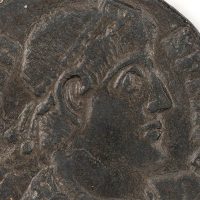
Explore these two unique coins courtesy of our good friend Graham Isom who provided the coins to us from his personal collection to study. Thank you Graham! Dutch Coin Front and Back Roman Coin Front and Back
In this brief study, we examine efficient methods for imaging entomology collections with the following aims: more than 5,000 specimens to image deciding the optimum quality and resolution possible low total cost per specimen handle a wide variety of specimen sizes 3 views per specimen (anterior, dorsal, lateral) As a comparison, we’re using the current…
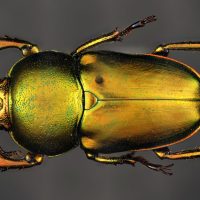
We had a fantastic experience at the California Academy of Sciences Robot Nightlife last Thursday where we made this Australian Golden Stag Beetle – high resolution close up image. We’d like to extend a special thank you to Cal Academy, Vic Smith (who provided the Stag Beetle), Peter Arko (who runs the event), and everyone…
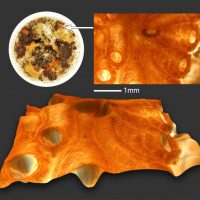
Top and Bottom Views, 2 gigapixels each (2,000 megapixels) Close-up Views and 3D Data Below is an example 3D section of one small part of the settling plate. This area was shot with a resolution of 29,000 dpi and then processed and rendered to convert the data to a 3D view and video.
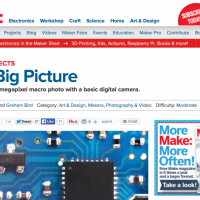
We’re proud to be featured in Volume 38 March 2014 of Make Magazine. The article explains how to create high resolution images with a simple build-it-yourself rig and a point and shoot camera. It’s a simple form of what we do for our ‘day jobs’. In the examples – we used an Arduino Due as a…
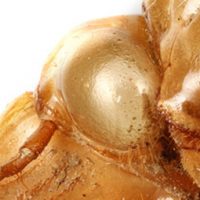
A 7.8 gigapixel (7800 megapixel) explorable image created from over 60,000 individual photographs at a resolution of 26,318 dpi. Specimens provided by Dr. John E. Rawlins, Section of Invertebrate Zoology, Carnegie Museum of Natural History. About the Cicada…(from the University of Michigan Museum of Zoology)… The 17-year life cycle of Magicicada septendecim is of critical…
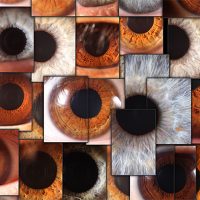
The photographs shown below were taken by Gene Cooper at the Siggraph 2011 Conference in Vancouver, CANADA. The collection of iris photographs presented here are just a few of the thousands that were produced during the conference. The iris photography activity allowed Siggraph attendees to learn about and try different tools for capturing macro photographs…
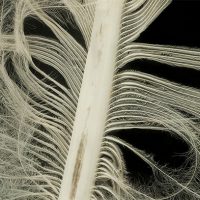
The eagle feather image was the first image created by GIGAmacro. This explorable image was constructed from 7,584 photographs using an early prototype of the GIGAmacro Professional Macro Photography System. About the eagle feather… Eagle feathers are often used in various ceremonies and are used to honor noteworthy achievements and qualities such as exceptional leadership…