
We were at MakerFaire last weekend and had a ball talking to old and new friends.
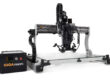
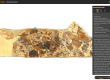
We had the Magnify2 front and center, and also showed of the new GIGAmacro Viewer (we moved from Flash) with a wide selection of images. We know that insects are very popular and hence we tend to use them as examples. But many other subjects have been imaged on GIGAmacro systems and we wanted to show the versatility of the system. So we had images of a burger patty, oil shale, bee hive frames, a settling plate at Exploratorium with live marine animals, snail eating beetle (see we had to have one!), the back of a 2 dollar note, and a fish fossil. As you can see, a huge variety of images!
During the day Gene and I talked to a few journalists – as well as lots of people who wanted to know what we did and how. Well the team from TESTED (the guys from Mythbusters) talked to me and I thought no more about it. Turns out that they published a close to 5 minute segment on their YouTube channel and we had almost 27,000 hits and close to 900 likes on the first 24 hours.
Video transcript
Visual description: An interviewer speaks with Graham Bird at Maker Faire 2014 beside the GIGAmacro Magnify2 imaging system and sample images. Graham points to the camera rig, a cicada image, and a 3D milling of Lincoln’s nose derived from an image of a penny.
[whooshing]
Norm: Hey, it's Norm from Tested.com here at Maker Faire 2014 with Graham Bird, with a company called GIGAmacro. And you guys have created a device that takes macro photos, but basically gigapixel photos. How does that work?
Graham: Well, we have a machine here called the Magnify2. And what it does is produce huge images, gigapixel images, but they're also macro images, which is particularly hard to do.
Norm: So no camera takes a single gigapixel image and people might have heard of gigapixels, it's the idea of stitching photos together. So how does that change from macro level as opposed to taking a landscape photo?
Graham: So we need to do both. So you talked about stitching, but we also do stacking. So this machine moves around to each position and then it takes a whole stack of photographs in each particular position. And it goes to another position and repeats that.
Norm: So it's three axes of movement. How many photos are in one plane and how many levels of stacking are you taking?
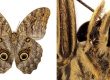
Graham: It really depends. It's like everything else in photography, it depends. But the illustration that we have behind me with the cicada there is 65,000 photographs put together into a single image.
Norm: And the stacking is needed so you have depth.
Graham: Right. So the challenge with macro photography is that as you get closer and closer, the depth of field vanishes. So we have a depth of field of about a tenth of a micron on this system right now when we're taking the image. So in order to get an image that's sharp from top to bottom, we need to take a stack of images, about a tenth of a millimeter apart, and then we stack them together. Once we've done that for each XY position, we have a set of images that we then stitch together, in the traditional way that you would stitch a big panorama. And then you choose the level of detail, where that plane of focus is for each frame.
Graham: Actually the way we do it is a little different. So here we're running with a standard DSLR. This is a Canon T3i. So a fairly low end DSLR. We put a good macro lens on it. And then what we do is rather than having the camera and the system auto focus, we focus it at one point in space and then we drive the whole rig up and down. So the machine does not do auto focusing at all, even though it's set up and capable. What we do is we take a picture and we move the whole Z-axis up and down in order to drive it to a new position. And the focus point of course moves as we do that. And then when we've got all of those images and we can often have anything from 10 to 50 images in a stack, we stack them together.
Norm: And those are processed and all stitched together. Now because you're getting Z-axis data, that tells me that you have some topographical information.
Graham: Well, funny you should mention that. We have what's called 2.5D. So we do have a 3D prototype running, but it's a little different to this machine. This machine is really two-dimensional, but because we're doing all of this image stacking, so we take a focus point here, and then here, and then here, and then here, and so on, we actually derive this depth information as part of knowing where the camera was focused at that point. So this, for those of you who can't recognize it, is Lincoln's nose from a penny. And we blew up the image, and then we took it We put it on a 3D mill and milled out Lincoln's nose. But the depth information is automatically derived from our images.
Norm: Is your GIGAmacro system mostly used in academic institutions, is it for animals? What are the use cases?
Graham: Well, we have all sorts of use cases. So there are some in manufacturing, but they tend to be pretty closed about what they want to do with it. So we don't have use cases for those. The people who like to talk about what they do are entomologists, paleontologists, geologists, Historic Scotland, for example, are imaging old documents, you know, where they're not flat and they have texture, and they have 3D wax seals on them. So they're using exactly this system to image things like that. So a whole range of folks, they also use it because once we've got these images, we use tile technology like Google Maps. So you can zoom in and in and in, and it's still sharp. But also like Google Maps technology, we can put a point of interest, except this can be a lesson plan from a teacher, or it can be a question from a student, or if you've got young kids and you want to get them really fascinated by this stuff, you can hide a little piece of information really deep and they go in and then they look at the answer and put their answer onto the layer.
Norm: So you've also developed the browser, of the viewing technologies, so these can be embedded on websites and anyone can zoom in and view them online.
Graham: Exactly, so this is a whole workflow, from imaging the subject to the workflow, that stacks, that stitches, and then the technology that tiles the image, and you can run it either on your web server, on our web servers, or on any public web server.
Norm: Thank you so much, Graham. We'll be checking out your GIGAmacro images on the website.
Graham: Yeah, GIGAmacro.com.
Norm: Thank you, and we'll have more from Maker Faire 2014 on Tested.com. I'm Norm, I'll see you next time. Bye. (audience laughing)
I had no idea till I started seeing G+ comments landing in my mailbox this morning. We had an absolute ball and though I hate seeing and hearing myself, I have to say that (apart from one mistake – can you spot it?) it went well and it tells the story of what we do well.
I have always dreamed of working with a bunch of smart folks who work on challenging problems that make a difference. I have to say that being at GIGAmacro is pretty close to living that dream! Being at MakerFaire amplified that; when you are doing something you love, with people you admire and customers who are enthusiastic there is little that can be better.
Graham has worked as a business and marketing leader in high technology, aviation and not-for-profit large and small organizations.
He jumped out of corporate life in 2007 to ‘have more fun’ and does so helping small companies with strategy, business, and marketing as well as traveling and making pictures.
He loves working with smart groups of people to solve challenging problems.
Gadgets of all sorts (especially anything to do with aviation and flight) and photography have fascinated since early childhood. He is also an accomplished photographer who exhibits regularly and a former competition aerobatic pilot.
Graham is a transplanted Brit (hence the humo(u)r) who moved to CA in 1996. Now in Oregon via North Carolina (grandchild chasing)
He is a retired Fellow of the Chartered Institute of Marketing and a Chartered Marketer.
You can find him on LinkedIn please connect with him there.